
510 Podcast Studio · Blog
Podcasting in 2027: Why the Future of Podcasting Is Short-Form Video
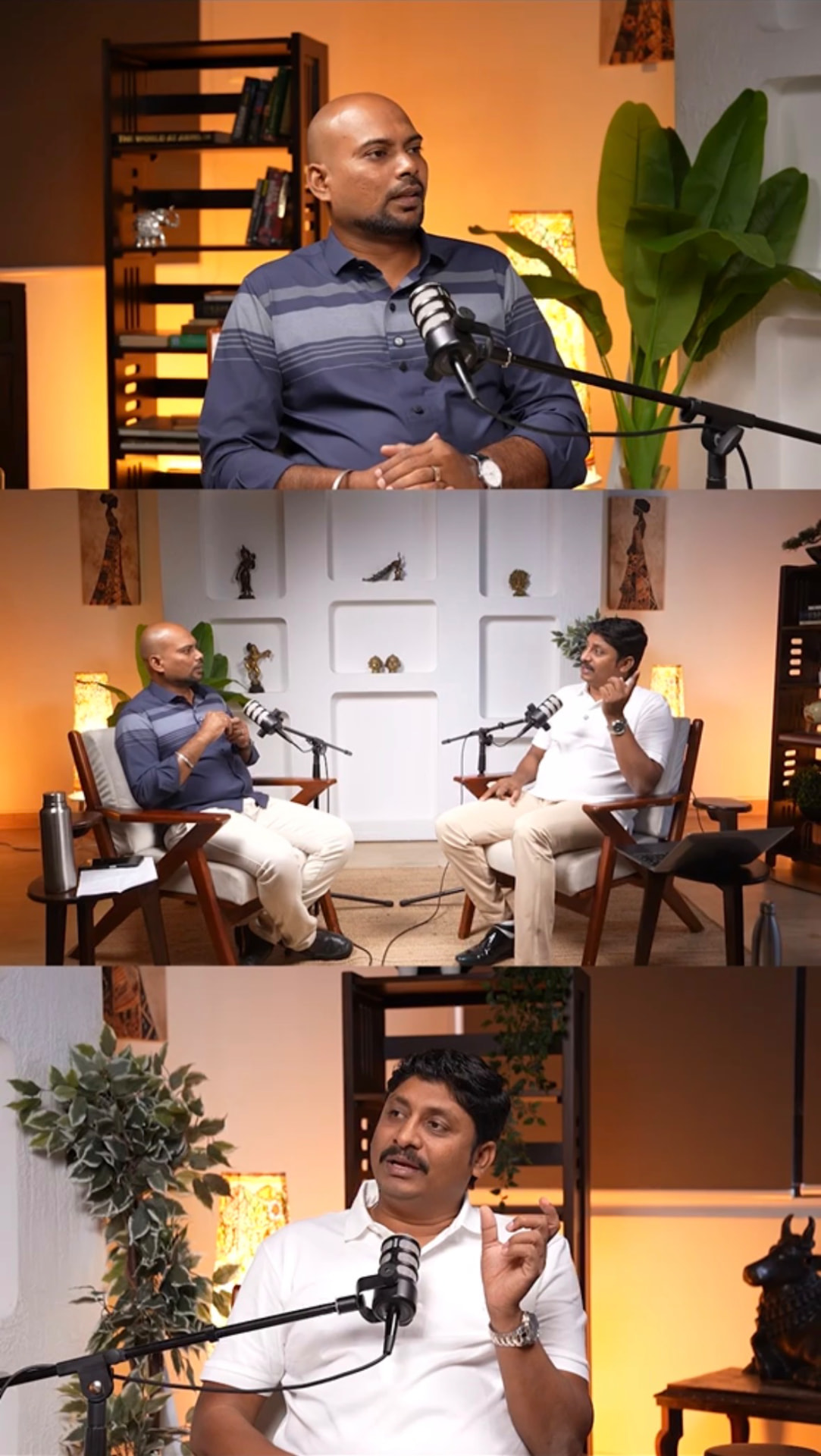
The most important part of your next podcast episode might not be the episode itself. It might be the 30-second clip that makes a million people discover it.
For years, the podcast industry followed a simple formula: invite an interesting guest, record a conversation, publish the episode on YouTube or Spotify, and hope people tune in.
That formula is changing.
Today, a podcast can have an incredible guest, a brilliant conversation and hours of valuable content — and still struggle to get discovered. Meanwhile, a single 40-second clip from that same conversation can reach millions of people who have never heard of the show.
As we approach 2027, the opportunity is becoming increasingly clear: podcasts need to be created not just for listening, but for clipping, distribution and discovery.
The future belongs to creators who understand that a podcast is no longer just a show. It is a content engine.
1. The episode is the product. The clips are the marketing.
Imagine recording a two-hour conversation with a successful entrepreneur.
The traditional approach is to upload the full episode, create a thumbnail, write a description and share a promotional post.
The problem? You are relying on people to already know who you are, care about your guest and be willing to invest two hours of their time.
Short-form content removes that barrier.
A conversation about how the entrepreneur lost ₹50 lakh could become a 45-second Reel. A discussion about hiring employees could become a LinkedIn video. An uncomfortable question about relationships could become a YouTube Short.
Each clip offers a different reason for someone to discover the same conversation.
Instead of promoting one episode once, you are creating dozens of opportunities for that episode to reach new audiences.
And the platforms are already built for this behaviour. Instagram Reels, YouTube Shorts and TikTok allow people to discover content from creators they have never followed.
The strategic shift for 2027: Stop asking, “How do we promote this podcast episode?” Start asking, “How many discoverable pieces of content can we extract from this conversation?”
2. The world's biggest creators are already investing in clipping
Clipping is no longer just an editing technique. It is becoming a dedicated distribution business.
Consider these real-world examples.
Example 1: MrBeast and the rise of clipping armies
MrBeast, one of the world's biggest digital creators, has helped demonstrate how powerful large-scale content distribution can be.
In October 2025, the Los Angeles Times reported on how MrBeast and other major internet personalities used large networks of independent editors to turn long-form videos into short clips for social media. The reported campaigns included payments tied to views, making clipping a performance-oriented marketing channel.
The underlying idea is straightforward: rather than depending exclusively on an official account to publish every clip, a creator can use a wider network of people to distribute selected moments across multiple social feeds.
For podcasters, this creates an interesting possibility.
Imagine recording one episode and giving a network of approved clippers access to the footage. One person extracts the funniest moment. Another finds the most controversial opinion. Someone else identifies the most useful business lesson.
Different clips reach different audiences, even though they originate from the same conversation.
The lesson is not that every podcast needs thousands of editors. It is that distribution capacity can become a competitive advantage in its own right.
Example 2: BobbyCast — podcast clipping at scale
BobbyCast, the music-focused podcast hosted by Bobby Bones, is one example of a show featured in clipping agency Clipping Culture's published campaign results.
The agency reports more than 11.7 million views across 3,016 clips for BobbyCast. These are campaign figures published by the agency, rather than independently audited lifetime statistics.
The important takeaway is the volume of distribution.
A podcast episode is a finite recording. Its potential short-form output is much larger. By extracting individual moments and distributing them consistently, the show gains many more opportunities to reach people who might never search for the full episode.
For a podcast producer, this changes the production brief. The job is no longer finished when the episode is edited. It includes identifying the strongest moments, packaging them for social media and getting them in front of the right audiences.
Example 3: Murder With My Husband — thousands of opportunities for discovery
True-crime podcast Murder With My Husband has also appeared in Clipping Culture's published case studies.
The agency reports approximately 7.7 million views across 7,982 clips for the show. Again, these are figures reported by the campaign provider, not independently verified lifetime totals.
Why is this format particularly interesting?
True-crime conversations naturally contain suspense, unanswered questions, surprising developments and strong emotional reactions. These elements can make compelling short-form videos when edited with sufficient context.
A clip can open with a mystery, introduce a key detail and leave the viewer wanting to understand the full story.
The broader lesson applies well beyond true crime. Business podcasts can use surprising statistics. Comedy shows can use punchlines. Health and science shows can use counterintuitive findings. Founder interviews can use pivotal decisions.
Every genre has its own clipping language.
Example 4: The growth of specialist clipping agencies
A new layer of the creator economy is emerging around companies that specialise in turning existing content into short-form distribution campaigns.
For example, Clipping Culture offers managed campaigns across TikTok, Instagram Reels and YouTube Shorts. OCRO Media describes a model in which podcast clips are posted through selected creator pages, with pricing tied to delivered views.
These services demonstrate that clipping can involve much more than editing.
A specialist campaign may include:
- Identifying the strongest moments from an episode.
- Creating vertical videos with captions and strong opening hooks.
- Matching clips to relevant audiences and platforms.
- Distributing them through creator or niche pages.
- Tracking views and engagement across published clips.
This is an important distinction: editing produces the asset; distribution gets the asset in front of people.
In 2027, podcast teams will increasingly need to think about both.
3. Why the podcast itself needs to change
If short-form clips are becoming central to podcast growth, the solution cannot simply be to edit more aggressively after recording.
The recording process itself needs to evolve.
Conversations need more self-contained moments
A great long-form conversation can be slow, nuanced and full of context. A successful short-form clip often needs to communicate one complete idea in under a minute.
That means asking better questions.
Instead of asking a guest, “Tell us about your career,” a host might ask, “What was the worst financial decision you made in your first year of business?”
Instead of asking, “What do you think about hiring?”, ask, “What is the biggest mistake founders make when hiring their first employee?”
The second questions are more specific. They invite stories, opinions and answers that can stand on their own.
The aim is not to turn every podcast into a series of artificial sound bites. It is to create a conversation that produces memorable, meaningful moments naturally.
Hosts need to think in hooks
A clip competes with everything else on a viewer's screen.
The opening seconds therefore matter enormously.
Compare these two openings:
Weak opening: “So, as I was saying earlier, when we started the company…”
Stronger opening: “We nearly shut the company down because of one employee.”
The second creates immediate curiosity. Viewers have a reason to keep watching.
A good podcast production team should look for these moments during pre-production, recording and editing. When appropriate, the host can also restate a question or answer so that the clip makes sense without requiring the viewer to watch the entire episode.
Every episode should have multiple content angles
A 90-minute interview with a founder might contain:
- Three surprising business lessons.
- Two personal stories.
- Two controversial opinions.
- Three practical tips.
- One emotional turning point.
- One funny exchange.
- One strong answer to a frequently asked question.
These are potential content angles, not a guaranteed number of viral clips.
Each angle can be edited and packaged differently. Some might work best on Instagram. Others could be more suitable for LinkedIn, YouTube Shorts or TikTok.
The goal is to give every strong idea the best chance of finding its audience.
4. The new podcast production workflow
The traditional workflow is linear:
Record → Edit → Upload → Promote.
The next-generation workflow is built around multiple outputs from the beginning.
A more effective model for 2027:
- Plan for discovery. Identify the subjects, questions and stories that could generate strong standalone moments.
- Record the full conversation. Prioritise audio quality, clean camera angles and a natural conversation.
- Review for clip-worthy moments. Find complete stories, strong opinions, surprising revelations and useful insights.
- Create platform-native edits. Produce vertical videos with readable captions, appropriate pacing and clear context.
- Distribute consistently. Publish across the podcast's own channels and, where appropriate, approved partner or creator accounts.
- Analyse performance. Study retention, shares, saves, comments, profile visits and actual movement towards the full episode.
- Use the data for the next recording. Identify which subjects and storytelling styles earned attention, then build on those insights.
This is where a dedicated clipping agency can become valuable. The podcast host can concentrate on the conversation while a specialist team handles content extraction, editing, publishing and performance reporting.
5. Why hiring a clipping agency can make sense
Most podcast hosts are not short of content. They are short of time, editing capacity and distribution expertise.
A weekly podcast can generate hours of footage, but the host may only publish a handful of clips because selecting, editing, captioning and uploading videos is labour-intensive.
A clipping agency changes the economics of that process.
Instead of hiring a full internal team to handle every stage, a podcast can outsource specific parts of the workflow to specialists.
There are three broad models.
Model A: Editing-only agency
The agency identifies moments, edits clips and delivers the finished videos. The podcast team publishes them.
Model B: End-to-end content agency
The agency handles selection, editing, platform-specific versions, scheduling and reporting.
Model C: Distributed clipping network
Approved creators or niche pages publish clips to their own audiences. This can extend reach beyond the podcast's official channels, although results and audience quality vary.
The right model depends on the podcast's size, budget, audience and goals.
A smaller show might begin with an editor producing 10–15 strong clips per episode. An established show might commission a larger volume of clips and experiment with external distribution.
The objective should not be to publish the most videos possible. It should be to reach the right audience with the right moments.
6. What a podcast could look like in 2027
Imagine a business podcast recording four episodes a month.
Each episode runs for 90 minutes. The host interviews founders, investors and operators.
Here is what a short-form-first production model might look like:
| Output | Monthly volume |
|---|---|
| Full podcast episodes | 4 |
| Short-form clips per episode | 15 |
| Total short-form clips | 60 |
| Platforms for distribution | 3–4 |
| Potential publishing opportunities | 180–240 |
The final row represents potential platform placements if each of the 60 clips is adapted or published across three to four platforms. It does not mean 180–240 unique videos, nor does it guarantee views.
The same original conversations can now support a month of content distribution.
Some clips will underperform. A few may perform exceptionally well. The team can use those results to learn which topics, hooks and formats resonate with its intended audience.
Over time, the podcast becomes more than a weekly upload. It becomes a consistent source of content for social media.
7. The biggest mistake: confusing views with growth
There is one important caveat to the clipping opportunity.
A million views do not automatically translate into a million interested listeners.
A clip might go viral because of an out-of-context statement, a misleading caption or a moment that attracts people who have no interest in the actual show.
That can inflate visibility without building a loyal audience.
A strong clipping strategy therefore needs more than views. It should measure:
- Attention: Are people watching beyond the opening seconds?
- Engagement: Are they sharing, saving or discussing the clip?
- Discovery: Are viewers visiting the podcast profile or full episode?
- Conversion: Are viewers becoming subscribers, listeners, customers or community members?
- Quality: Does the clip accurately represent the guest and the original conversation?
The best clipping agency is not necessarily the one that generates the most views. It is the one that helps the podcast reach the right people without sacrificing the quality or credibility of the show.
Context, permissions, platform policies and transparent paid-distribution practices also matter.
8. The opportunity for podcast studios and agencies
This shift creates an opportunity for podcast studios to rethink what they sell.
For years, the primary offering has been recording time: cameras, microphones, lighting, sound treatment and editing.
But equipment and studio space are only part of the value.
A client ultimately wants attention, credibility, an audience or business results.
A studio that provides only recording time competes with other studios on price, location and equipment. A studio that offers recording, content strategy, clipping, distribution and analytics can position itself as a more complete content partner.
For example, a podcast studio could offer three levels of service:
1. Record
The client books the studio and receives the edited full-length episode.
2. Record + Repurpose
The client receives the full episode and a batch of short-form clips ready for publishing.
3. Record + Distribute
The client receives the full episode, a planned schedule of short-form content, publishing support, performance reports and optional external clipping campaigns.
This creates a more recurring relationship with clients. Instead of selling isolated studio hours, the business sells an ongoing content-production and distribution system.
For agencies, it also creates a natural way to combine production, social media management and performance marketing into one offering.
9. So, is podcasting becoming short-form content?
Not exactly.
Long-form podcasting still offers something short-form video cannot fully replace: depth, trust, nuance and sustained attention.
People may discover a founder through a 30-second Reel and then spend two hours listening to that founder's story. The short clip introduces the idea; the full episode builds the relationship.
The two formats are complementary.
The real shift is that short-form content is becoming a major discovery layer for long-form media.
In 2027, successful podcasts will increasingly treat every recording as the starting point for a broader content strategy. They will plan for clips, build workflows around repurposing, work with specialist editors and experiment with distribution beyond their own accounts.
The podcasts that adapt will have more opportunities to be discovered. Those that ignore short-form distribution may find themselves producing excellent conversations that very few new people ever encounter.
The future belongs to podcasts built for distribution
The next evolution of podcasting will not be defined by who owns the most expensive cameras, who records the longest episodes or who uploads the most frequently.
It will be defined by who knows how to turn a great conversation into a repeatable system for discovery.
One conversation can create dozens of meaningful moments. Those moments can reach different audiences, start new conversations and bring new people back to the original show.
That is the opportunity for 2027.
Don't just build a podcast. Build a content engine around it.
Because the next big podcast might not be the one with the best episode.
It might be the one that knows how to make every episode travel.